Ecommerce in Algeria: From COD Orders to Cash You Can Reinvest

Orders have come in from your ad. You confirmed some and shipped the parcels. A few days later, some customers have received their orders, other parcels have returned, and the courier still holds part of the money. Was the campaign profitable? Can you increase advertising without running out of money to buy stock?
To answer, you need three separate figures: what you sold, what remained after costs, and what money you received. A rising order count alone cannot answer those questions.
This guide explains a practical way to sell in Algeria: identify a clear need, make an honest offer, follow a group of orders until their outcomes are known, then decide using the numbers. It is for beginners planning a first test they can evaluate, and merchants receiving orders without knowing where their margin goes.
No method guarantees success for every product. There are steps that reveal what customers want, where sales fall through, and whether more orders will leave money after expenses.

Follow the sale from the product and offer through delivery and collection. The article uses AI-generated illustrations; they do not depict the named merchants or their results.
1. What can we learn from published experiences and practices in Algeria?
Sana Nasri says Ghir Liha began in late 2017 with one clothing design, a seamstress and Instagram. The brand describes modest and extra-long clothing for tall women. Her account also mentions failed deliveries and disappearing customers. This is a founder's published account, not audited financial evidence. Ghir Liha's story.
Our takeaway is to identify the person you serve and the problem you solve before expanding the catalogue. Women's clothing is a broad category. A design long enough for someone who finds ready-made clothes too short identifies a need you can test.
In a presentation given by Samir Bouazabia of Batolis in March 2018, the company described checking order quality and accuracy, secure packaging, and monthly assessments of logistics providers. This is a historical example of practices reported by an Algerian retailer, not a description of its current results. Batolis presentation published by the Algiers Directorate of Commerce.
Decathlon Algeria explains in its shopping instructions that delivery orders are confirmed through a link sent to the customer's phone number before preparation begins. The useful example is a clear confirmation step, without assuming it increased sales by any particular percentage. Decathlon Algeria's shopping instructions.
You do not need to be the size of these businesses to apply the principle: know whom you sell to, substantiate your promises, and follow what happens after an order is placed.
2. Start with a need you can describe and test
Before buying a large quantity, answer in one sentence: Who will buy this product, what problem will it solve for them, and why would they choose it at this price?
Speak with people in your target audience. Ask about the last time they faced the problem, what they bought or tried, and what did not suit them. Asking whether they like a product can bring compliments instead of information about a buying decision.
Keep a record of recurring questions: size, material, compatibility with a particular device, space needed to use it, ease of cleaning, or box contents. These questions help you decide what to photograph and explain on the product page.
Review offers customers can buy, including the total price with delivery, the details provided, and after-sales service. Seeing many ads for a product does not prove its sellers are profitable.
Inspect the sample before writing the ad
Try the product yourself in the use you will demonstrate. If you sell a drawer organiser, measure it and show how to check that it fits a drawer. If you sell clothing, provide measurements and explain how to take them, rather than relying only on size letters.
Check the supplier too. Can they supply the same specifications again? What is the replenishment lead time? How do they handle a defect found in a batch? A difference between the sample and the goods customers will receive needs resolving before you increase advertising.
Calculate the cost of getting the goods to you, packaging them, and providing after-sales service. Measure the parcel's weight and dimensions after packing. An offer that appears profitable before shipping can look different once the courier's invoice arrives.
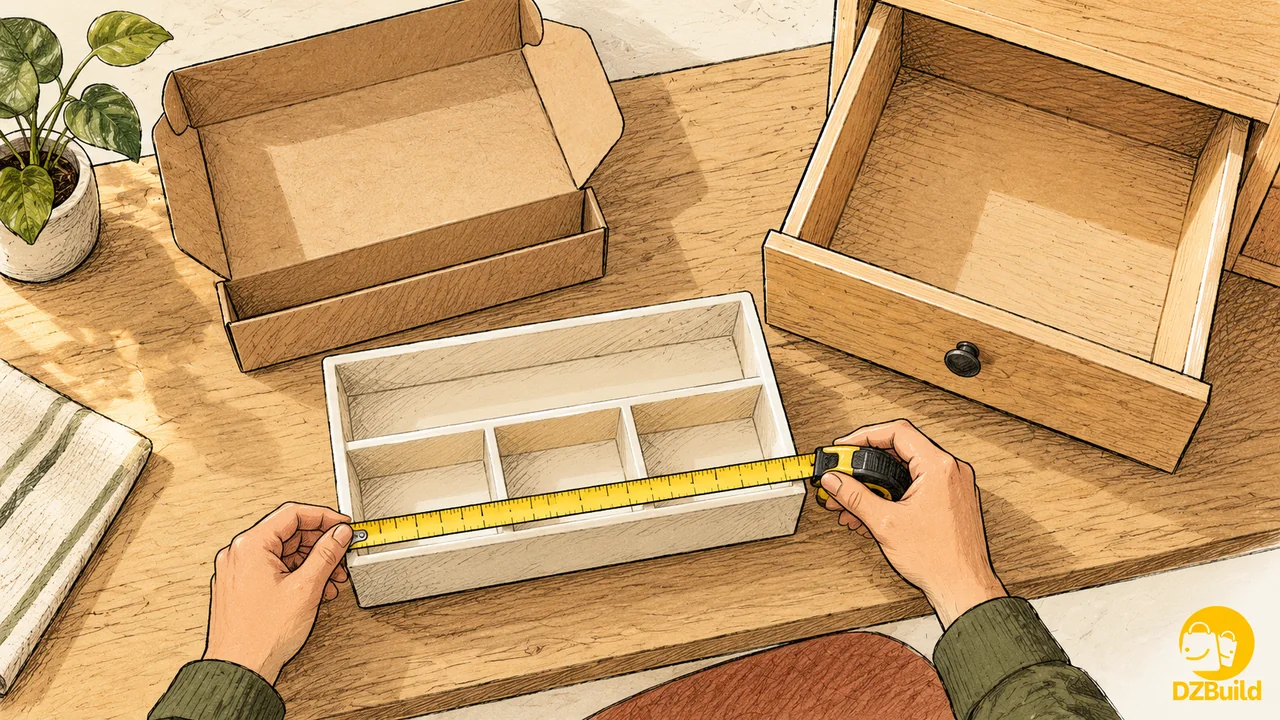
Inspect and measure the sample before promising that it suits a particular use.
3. Make the offer clear before asking customers to buy
The product page should answer the questions customers need to make an informed decision:
- What exactly will arrive? State the quantity, size, colour, materials or compatibility where relevant.
- What is the product price? What does delivery cost for the selected destination and method?
- Is the item in stock? What preparation and delivery time should the customer expect?
- How does the customer request an exchange or report a faulty product? Who pays the charges in each case?
- How can the customer reach the store for help?
Do not leave customers to discover the delivery charge during the confirmation call or at their doorstep. Do not promise a fixed arrival date that you and the courier cannot meet.
For example, Cosmos Algeria publishes an exchange process and explains how responsibility for the charges changes when the brand made the mistake. The useful practice is explaining the procedure and who pays. Another store's policy should not be copied or treated as the law governing your business. Cosmos's published exchange process.
Show what customers need to see
Start with a video showing the real product in use. Show its size beside a familiar object, what comes in the box, how it works, and any limitations that could affect the buying decision. An attractive image cannot replace that evidence.
You can test three different angles: the problem the product solves, how to use it, or an answer to a recurring objection. Give each version a clear identifier in your test records. If you change the price, image and audience together, you will not know which change was associated with the result.
Compare how these versions lead to confirmed orders, then to completed deliveries. Comments and likes help you understand questions, but they are not sales. Different results between two ads do not establish the cause on their own; destinations, timing or audiences can also differ.
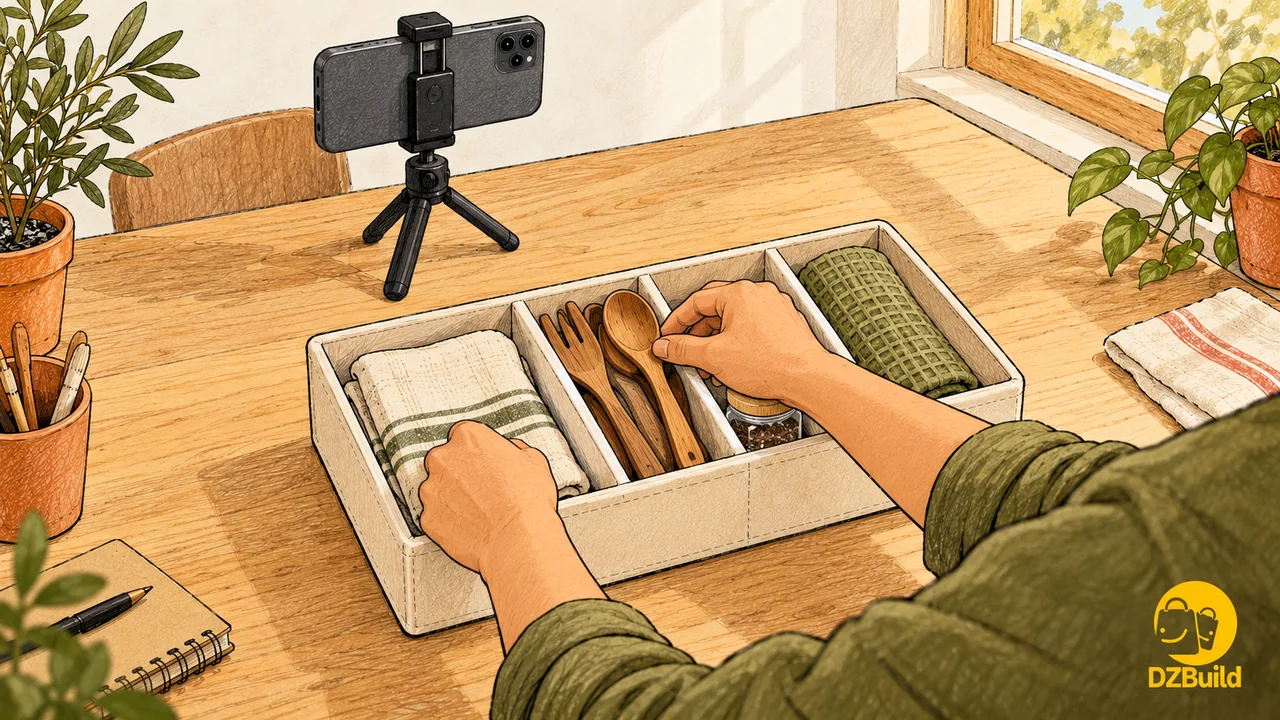
Show how the product works, its size and its contents with a simple filming setup.
4. Confirm the details and record why orders stall
Confirmation gives you a chance to check that the customer understands the item, the total amount and the delivery method, and that the shipping details are correct. Getting a quick yes is not enough.
You can adapt a message like this:
Hello, this is [store name] about your order for [product name]. You selected [size or colour]. The product costs [amount] DZD, delivery costs [amount] DZD, and the total is [amount] DZD. Delivery is [to your home or the specified collection office] in [commune]. Are these details correct and suitable for you?
Fill in the details before sending it. For office collection, identify the office and its location; the wilaya name alone does not tell the customer where to go. Request only the information needed for the order, and keep it in a private record.
If the customer cancels before dispatch, record the reason. Do not keep calling after a clear refusal. If they do not respond, keep the order unconfirmed; a lack of response alone does not establish fraud.
Distinguish an unaffordable final total, an unclear size choice, an unreachable customer, and an out-of-stock item. Labelling all of these as an unserious customer prevents you from seeing what you can fix.
5. Follow the same group of orders until you know its outcome
Give the group a simple name, such as Drawer organiser, first offer, launch week. This means a defined set of orders, not a random day's store totals.
Money arriving today may relate to orders from last week's ads. Dividing today's advertising spend by today's deliveries does not give you an accurate cost per sale for that campaign.
Create a private record, even a simple spreadsheet. For each order, keep its number, creation date, product or variant, source when known, delivery method, tracking number, status, and cancellation or return reason. Add the actual expenses, the amount received, and the settlement reference.
Leave the source unknown if you cannot link the order to a particular ad. Inventing attribution gives you a tidy report and a poor basis for decisions.
Track these stages:
| Stage | What it means |
|---|---|
| Submitted order | Order details have arrived; a completed sale has not yet been established |
| Confirmed order | You checked the details with the customer |
| Shipped parcel | It has been handed to the courier and has tracking |
| Delivered order | The customer received it according to the tracking information |
| Return received | The parcel came back to you and you inspected its condition |
| Money received by you | You received the funds and matched them to the settlement |
A parcel still in transit has a pending outcome. Do not count it as returned or ignore it to improve your rate. Compare groups that have had a similar amount of time to complete delivery, and record any orders or settlements that remain open.
6. A complete example in dinars: what remained from 100 orders?
All numbers in this example are fictional and for teaching. They are not courier tariffs, Algerian market averages, or results from a real store. Replace them with your invoices and terms. We assume one item per order and no discounts, damage, post-sale refunds or other outstanding amounts.
The group began with 100 orders. Twenty were cancelled before dispatch, and you shipped 80 parcels. Customers received 60 orders. The other 20 parcels returned to you, and you inspected them and found the goods suitable for resale. No parcels remain in transit in this example.
The item sells for 3,000 DZD and costs 1,200 DZD to buy. A customer who receives an order pays 500 DZD for delivery. In this example, each parcel sent costs 600 DZD to ship, with an additional 200 DZD for each returned parcel.
| Amount or cost | Calculation in DZD |
|---|---|
| Price of goods received by customers | 60 × 3,000 = 180,000 |
| Delivery charges paid by those customers | 60 × 500 = 30,000 |
| Total collected from customers | 210,000 |
| Purchase cost of the units sold | 60 × 1,200 = 72,000 |
| Outbound shipping for all parcels | 80 × 600 = 48,000 |
| Additional return charges | 20 × 200 = 4,000 |
| Packaging for all parcels | 80 × 80 = 6,400 |
| Advertising for this group | 20,000 |
| Confirmation labour and communications | 2,000 |
| Collection fees for this group | 1,000 |
| Amount remaining after the listed costs | 56,600 |
This remainder is the contribution margin: what sales leave after the listed variable costs to cover fixed expenses and taxes, then provide profit. It is not net profit. Rent, subscriptions, fixed salaries and any unlisted costs must be accounted for before assessing the final profit.
For your own store, use revenue after discounts; do not deduct a discount again if it is already reflected in the actual price. Record compensation, damaged or lost stock, and other costs attributable to the group. Do not stop at the figures in this example if your business has other expenses.
Why count shipping for 80 parcels when only 60 were sold?
Undelivered parcels still consume packaging and transport. Yalidine's August 2026 terms keep delivery and additional-service charges payable by the sender when the recipient refuses payment. Check your own contract. Official conditions, Article 17.
What about the purchase cost of the 20 returned items?
In this example, you paid 96,000 DZD to buy 80 units. We charged the sales with the cost of only 60 units, or 72,000 DZD. The remaining 20 units are worth 24,000 DZD at purchase cost and remain inventory after you recover and inspect them.
These units are not cash in your account or new sales. They are not a total loss while they remain saleable at their assumed value. If they are damaged or their value needs reducing, record that loss rather than accounting for them as undamaged stock.

Inspect returned goods before placing them back into stock available for sale.
7. Why can the margin look healthy while available cash is low?
Continuing the same example, the courier collected 210,000 DZD from customers. We assume it deducts the listed outbound shipping, return and collection fees from that amount, totalling 53,000 DZD.
| Reconciliation step | Amount in DZD |
|---|---|
| Total collected from customers | 210,000 |
| Assumed courier deductions | 53,000 |
| Net amount due to you | 157,000 |
| Amount you have received so far | 139,000 |
| Amount still owed by the courier | 18,000 |
That last amount is owed to you, but it is not cash you can spend now. Match each settlement to the courier's statement, reference and date; do not rely on the delivered status alone.
You paid 96,000 DZD to buy the 80 units, 6,400 DZD for packaging, 20,000 DZD for advertising, and 2,000 DZD for confirmation. The total is 124,400 DZD.
The cash surplus for this group so far is therefore:
139,000 DZD received − 124,400 DZD paid = 14,600 DZD.
After the remaining 18,000 DZD arrives, the cash surplus becomes 32,600 DZD. Together with the resellable returned inventory worth 24,000 DZD, this explains where the previously calculated remainder sits: 32,600 + 24,000 = 56,600 DZD, under this example's assumptions alone.
These figures are not your entire account balance. They describe this group's cash movement relative to what you funded, before fixed expenses, taxes and other obligations.
Avoid counting expenses twice: if you start from the net transfer after the courier has deducted its fees, do not subtract those fees again. If you start from the gross amount customers paid, subtract the courier's charges once.
Before reinvesting, list payments soon due to suppliers, the money needed to fulfil orders, and funds to keep for exchanges, refunds and other obligations. Receiving money does not make all of it available for advertising.

Match amounts owed to money received, and count courier charges only once.
8. The same cost per order can produce different results
In the example, you spent 20,000 DZD and received 100 orders. Advertising cost per submitted order is 200 DZD. Only 60 reached delivery, so advertising cost per delivered order is about 333.33 DZD.
Suppose a second group has the same number of orders, shipments and basic costs, but only 40 orders are delivered and 40 parcels return. We keep the fictional collection fee fixed at 1,000 DZD for comparison.
| Measure | First group | Second group |
|---|---|---|
| Submitted orders | 100 | 100 |
| Parcels shipped | 80 | 80 |
| Orders delivered | 60 | 40 |
| Returns received and suitable for resale | 20 | 40 |
| Advertising cost per submitted order | 200 DZD | 200 DZD |
| Advertising cost per delivered order | 333.33 DZD | 500 DZD |
| Amount remaining after the assumed costs | 56,600 DZD | 6,600 DZD |
The remainder fell by 50,000 DZD even though cost per submitted order stayed the same. That is why you follow the complete order outcome before judging an ad or increasing its budget.
This is an arithmetic comparison showing the effect of delivery outcomes, not an experiment proving why they changed. In practice, examine changes in the product, the advertising promise, destinations, preparation speed and communication.
9. Fix the point where sales fall through
Start with the most frequent cause you can substantiate rather than changing the entire store:
| What you observe | What to check first |
|---|---|
| Page visits without orders | Clarity of the offer and price, audience fit, and how the page works on a phone |
| Cancellations when the total becomes known | Whether delivery charges appear before the order is submitted |
| Repeated size or compatibility questions | Real measurements, explanatory images and limits on use |
| Many confirmations but slow dispatch | Stock availability and your ability to prepare orders within the stated time |
| Parcels waiting at a collection office | Whether the customer knows the office, its location and when to collect |
| Complaints that the item is different | Whether the ad matches the product and the supplier's quality |
| Good delivery results but unclear cash receipts | Matching collection records, invoices and transfers |
If customers say they did not understand the size, add a measurement guide and a real photo, then watch the next group of orders. If they object to the total, correct how the page displays it. Increasing ads before fixing the cause can repeat the same problem across more orders.
Do not judge a wilaya, courier or customer group from a handful of orders. Compare data for similar products, periods and delivery methods, and read the reasons before interpreting differences.
Check deliveries every day
Review stalled parcels, correct details with the customer and courier, and follow returns until you receive them. Do not wait until all delivery attempts have ended to start following up.
Yalidine's August 2026 terms describe sender notifications during delivery attempts, followed by a return if they fail. Monitor alerts while intervention is still possible. Official conditions, Article 10.
When comparing couriers, request a written offer covering outbound shipping, returns, collection, extra weight or volume, destination coverage, and settlement terms. For example, Maystro's pricing page makes its free-return offer conditional on a monthly return rate no higher than 20%. This threshold belongs to that offer; it is neither a normal rate for the market nor a target imposed on you. Maystro's pricing and offer conditions.
10. How to use DZBuild for this process
Use DZBuild to display the product, specifications, photos and options, organise orders and follow their statuses, and set delivery prices by wilaya. The aim is to keep order details clear and accessible instead of relying on scattered conversations. Product guide, order guide, shipping guide.
Alongside this, keep a record of the group's expenses and settlements: actual advertising costs, courier invoices, any losses from damage, and amounts received. The courier pays cash-on-delivery proceeds directly to the merchant under their agreement; a sales figure does not replace matching those transfers to your records. How you receive sales proceeds.
To begin, add one product with complete information, review the page on your phone, and check that the total and delivery options are clear. Then apply the tracking record to your first group of orders. Create a store on DZBuild.
Creating a store does not fulfil your business's legal requirements. Check the registration, invoicing and other obligations that apply to what you sell, and clearly display merchant details, product information, prices, delivery terms and after-sales service. National Centre of the Trade Register portal, Law 18-05, particularly Articles 11, 20 and 23.
11. When should you increase sales, and when should you stop to fix a problem?
Before launching a test, set an amount you can allocate without using money needed for existing obligations. Record what you want to learn and the conditions that would make you stop spending: a product defect, a promise you cannot fulfil, or using up the allocated amount without enough evidence to justify continuing.
There is no advertising budget or order count that suits everyone. Your product, margin, demand and delivery time determine what you can test.
Increase activity when you can answer these questions with numbers:
- Did a group with completed order outcomes leave enough contribution after its expenses, with room to cover fixed costs?
- Has the result repeated, or did it come from a few orders or a temporary offer?
- Have the funds arrived, or do you know the settlement dates and outstanding amounts precisely?
- Can the supplier, team and courier handle the new volume without harming service?
- Can you fund the next group even if some settlements are delayed or returns increase?
If the answers are unclear, fix a specific issue and observe another group. Increasing the budget gradually while monitoring results is a more useful practical test than assuming that doubling spend will double profit.
Learn from customers who completed a purchase
After delivery, make it easy to ask for help. When there is a useful reason to follow up, ask whether the product suits the customer's needs and record any problem they mention. Ask for an honest review, and obtain permission before publishing their photo or words.
If there is a complementary product they need, present the offer clearly and calculate the additional contribution after discounts and delivery. Do not assume that adding more items to an order is always profitable. Send subsequent marketing messages to customers who have agreed to receive them, and respect requests to stop.

Use after-sales questions to clarify the product and improve the next orders.
Questions beginners ask
Do I need many products?
You do not need a large catalogue to learn from a defined test. Start with an offer you can explain, supply and support, then expand based on documented demand and your financial and operational capacity.
Should I choose the ad that brings the cheapest order?
Compare delivery outcomes, return costs and contribution too. An order can appear inexpensive while fulfilling it consumes money, or while a large share of the ad's orders end without a sale.
With cash on delivery, have I been paid when the status says delivered?
Check the actual collection and settlement. The customer may have paid the courier while the transfer has not reached you. Record the amount owed and the amount received separately.
Should I put returned goods straight back on sale?
Receive and inspect them first. Check their condition, contents, whether they can be resold, and at what description and value. Record any damage or missing items. Do not treat stock in transit as ready on the shelf.
What is the first step I can take today?
Choose a product you know and a group of orders you can track. Write down the costs of the goods, packaging and advertising, and the courier's terms. Bring order outcomes and settlements together in one record. Your next decision then becomes specific: improve the offer, fix a return reason, change how you fulfil orders, or fund a new group with money that is available.